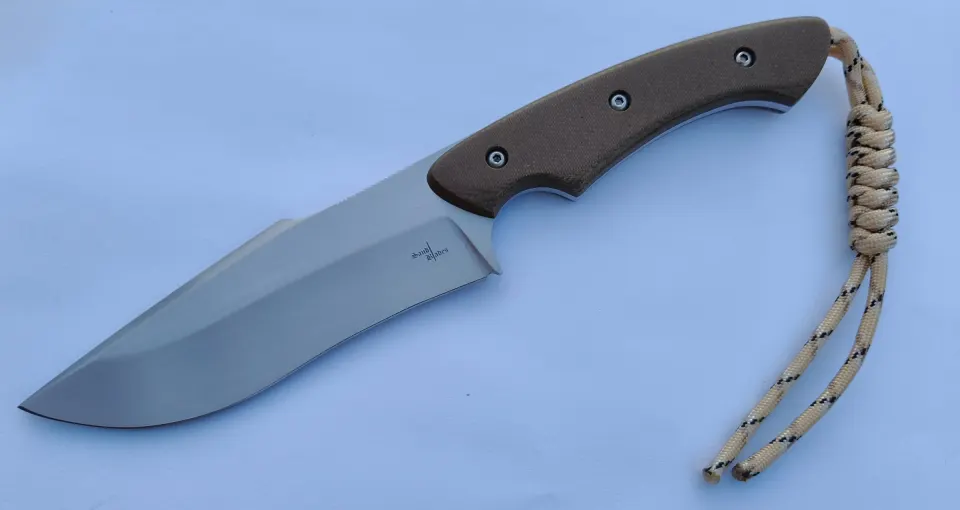
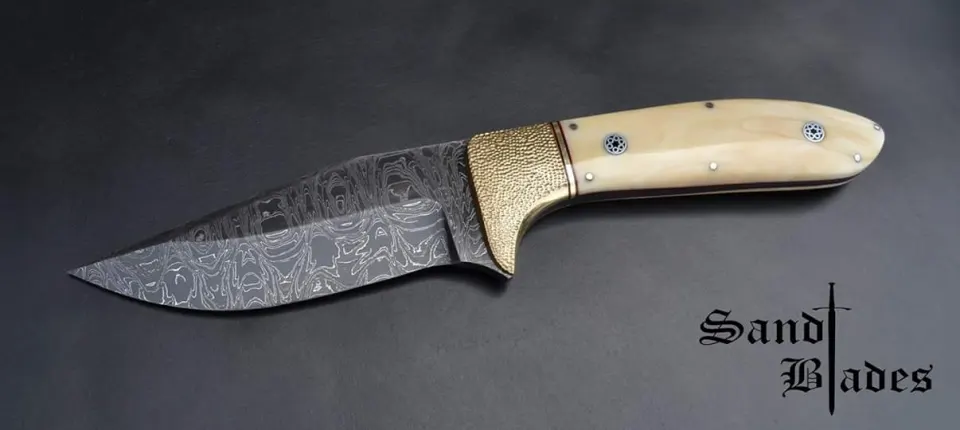
Knifemaker
Duane van der Sandt
Sandt Blades
Johannesburg, Gauteng
In Duane’s own words
My appreciation for metalworking and craftsmanship started long before I ever attempted to make my first knife.
My grandfather was an aircraft sheet metal worker by trade and had a large home workshop where he spent much of his time doing metal fabrication and general engineering work. As a young boy, visiting him over weekends was something I always looked forward to.
I can still remember the distinctive smell of hand cleaner and Fuchs soluble cutting oil from his milling machine and lathe. It was a combination of smells that I absolutely loved, and one that takes me straight back to his workshop. More than anything, though, I loved spending time with him, watching him work and learning whatever I could.
My grandfather was also the person our family turned to whenever their kitchen knives needed sharpening. My grandmother, aunt and mother would bring him their knives, and he would return them shaving sharp. I remember how much my mother appreciated having properly sharpened knives when preparing meals. Seeing what a difference a sharp edge could make fascinated me, and some of the lessons I learnt from my grandfather have stayed with me ever since.
Before he passed away, I had the opportunity to acquire his pedestal drill press. Little did I know at the time just how important that machine would become to me.
Unfortunately, my grandfather passed away before I ever attempted to make my first knife. He never had the opportunity to see that part of my journey, but his influence remains very much a part of what I do today.
My grandfather never got to see me make my first knife, but his drill press has been part of making every single knife I've made.
My first attempt at knifemaking was a fairly humble one. I started with an old Nicholson file, which I annealed in a homemade coal forge, a small hobby belt sander fitted with aluminium oxide belts, and teak for the handle scales.
Grinding the bevels took what felt like forever, and I quickly realised that my equipment had its limitations. Nevertheless, finishing that first knife gave me an enormous sense of pride. I remember thinking how proud my grandfather would have been to see it.
Since then, building my workshop, acquiring equipment and developing my skills have been a gradual process. Knifemaking is not an inexpensive craft, and producing a single knife properly requires a considerable amount of time and patience. One of the most important lessons I have learnt is that good workmanship cannot be rushed.
Today, Sandt Blades focuses primarily on hunting and everyday carry knives, with occasional kitchen knives and more refined pieces incorporating premium steels and finishes.
My approach to knifemaking is straightforward. I believe a knife should not only look good but feel right in the hand and perform the task for which it was intended.
Balance, weight, ergonomics and fit and finish are particularly important to me. I strive to keep my knives as lightweight and well-balanced as practical, paying attention to details such as weight reduction in full-tang designs, comfortable handle geometry and carefully finished surfaces.
I particularly enjoy the final stages of making a knife, when the hours of work begin to come together. There is something immensely satisfying about hand-rubbing a blade to achieve a clean satin finish, knowing the time and attention that went into it.
Whether a knife is commissioned to suit someone's particular needs or selected from my available work, my aim is the same: to produce a dependable, well-finished tool that feels right in the hand and offers genuine value for money.
I want the person holding one of my knives to appreciate not only its appearance, but also the thought, care and workmanship behind it. More importantly, I want them to feel confident using it for the purpose it was made.
What I enjoy most about knifemaking is the combination of practical engineering, working with my hands and creating something useful that another person can appreciate for years to come. Perhaps even pass on someday.
For now, Sandt Blades remains a growing passion alongside my professional career, but my ambition is to continue developing my craft and eventually pursue knifemaking full-time.
Until then, I will keep learning, improving and taking pride in every knife that leaves my workshop.
Duane van der Sandt
Sandt Blades — Made with purpose. Finished with pride.
Written for this directory in 2026.
Work
Pieces marked available are for sale. Contact Duane directly to buy one or to commission your own.
-
 3 photos
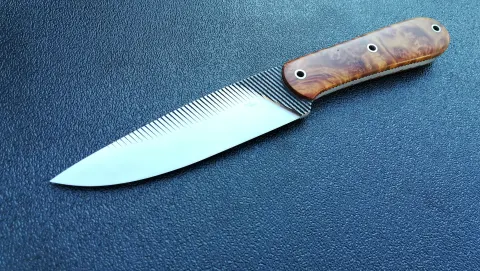
Utility
Steel: upcycled Bellota horseshoe/farrier's rasp. · Handle: Camphor bush burl
-
 2 photos
Liner lock
Steel: N690 · Handle: Skunkbush burl · Titanium liner lock · Buffalo horn back spacer
-
 3 photos
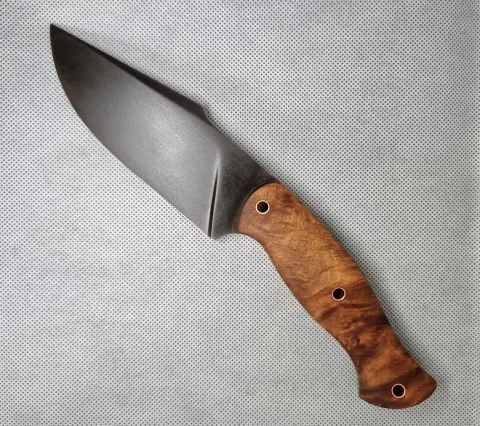
Drop-point Hunter
Steel: SAE5160 · Handle: Camphor bush burl · Full flat grind · Tapered tang
-

Utility
Steel: SAE5160 · Handle: G10 · High flat grind
-
 2 photos
EDC Push Dagger
Steel: N690 · Handle: Denel Aeronautics Carbon Fiber
-
 3 photos
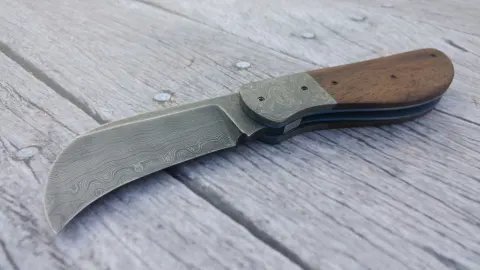
Custom liner lock biltong knife
Steel: Raindrop damascus · Handle: Leadwood
-
 4 photos
Tactical/Hunting Fixed Blade Available · 3000
Steel: N690 · Handle: Green canvas micarta · Length: 240mm · OAL: 240mm
-

Damascus hunting knife
Steel: Tinus Steenkamp Damascus · Handle: Warthog tusk · Custom-made hunting knife · Tapered tang